Click here if you missed part 1: Should you bring food photography in-house
Creating your own food photography setup doesn’t have to involve expensive studio equipment or a large space. In fact, most businesses are surprised by how little they actually need to get started - and how big the improvement can be when they have a reliable, repeatable setup in place.
With a small tabletop area, consistent lighting, and a few carefully chosen props, your team can create branded, professional-looking images quickly and confidently.
Keep your setup simple (and consistent)
The biggest mistake businesses make is assuming they need too much: multiple lights, complex backgrounds and piles of props. You really don’t.
What you do need is a minimal, consistent food photography setup that everyone can use - something that removes guesswork and speeds up your workflow instead of slowing it down.
A simple setup offers several advantages:
It gives your images a recognisable, on-brand look
It helps your team work faster
It ensures repeatability from one shoot to the next
You’re aiming for a small, reliable space where the lighting, surfaces, and camera position can be replicated every time.
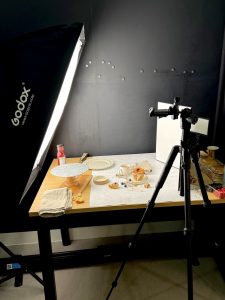
Your food photography setup: the essential kit
Here’s what I recommend as a starting point for any business creating in-house food content.
1. A dedicated small space
You don’t need an entire studio - just a clear tabletop near a window or in a corner where you can control the light. What matters is consistency: using the same set up each time dramatically improves image quality.
2. A single continuous light
Natural light is lovely if you have it, but it’s unreliable for teams who need to produce content quickly. One continuous LED light gives you:
the same look every time
the ability to shoot at any time of day
control over direction and intensity
You can do most food photography with just one light. Place it to the side or at behind the food for natural-looking shadows.
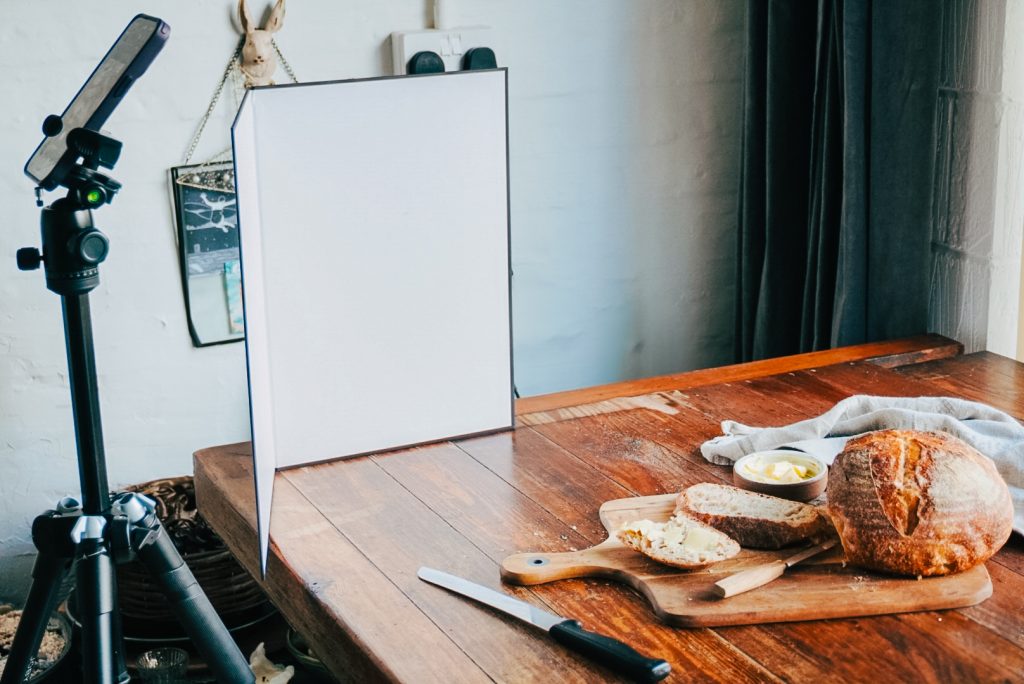
3. A reflector or bounce board
This is simply a white board or foam core that bounces light back into the shadow side of the dish.
It’s an inexpensive but essential bit of kit. I prefer to use a folded board that stands on its own.
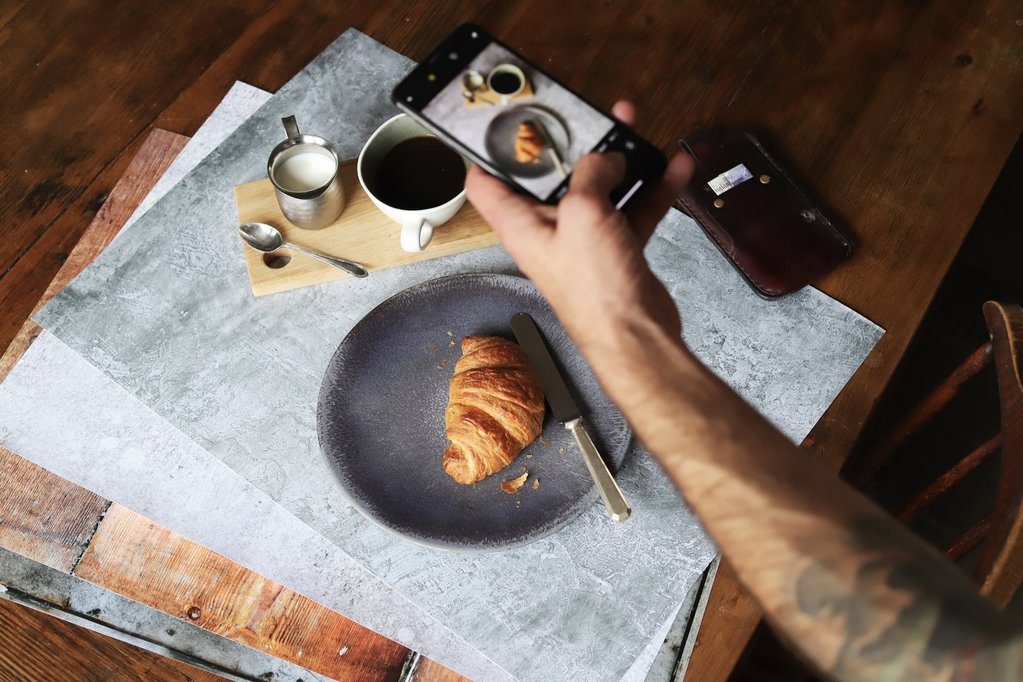
4. Photography backdrops
You only need two or three, perhaps one light and one darker and perhaps a textured or neutral option
Wood, stone-effect, matte tiles, or printed photography surfaces all work brilliantly. Avoid shiny finishes - they create reflections that are hard to control.
Choose colours that match your brand identity so your visuals feel cohesive.
Black Velvet Styling sell A1 wipe-clean, vinyl backdrops.
5. A tripod
Although a tripod is important for stabilising the phone or camera, for me its most important role is keeping the frame of view consistent. This leaves your hands free for styling. You can work without a tripod but each time you pick up the camera you'll be at a slightly different position.
Take a look at this blog post to help you decide which tripod to buy for food photography.
6. A camera or a phone
Either can work depending on what skills you have in-house and also what the final images will be used for. Continue to follow along with this series to see the advantages or limitations of each. If you can't wait take a look at this blog: Is a phone good enough for food photography?
Why Keeping It Simple Helps Your Team Succeed
A basic food photography setup reduces overwhelm and creates reliability. When team members know exactly where to shoot, which light to use, which surfaces to choose and where to position the reflector, the quality improves quickly, even for complete beginners.
It also means your visual output becomes recognisable, consistent, and on-brand - something that’s incredibly important when multiple people contribute to content creation.
This kind of setup empowers your team to create great images without needing years of experience or expensive equipment.
Get in touch if you'd like photography training for your business.
No comments yet.