
Why I’m Enjoying the Fujifilm X-E5 So Much - And It's Not Just The Film Simulations
There’s a lot of fuss about Fujifilm cameras. I knew that before I bought one. I’d seen images on Instagram, knew that certain models had an almost cult following and had heard a bit about Fujifilm’s film simulations. But I’m not sure I really understood what made them so special.
Now that I’ve been using my Fujifilm X-E5 for a while, I’m beginning to get it. And it’s not simply because it’s a lovely camera or because the image quality is excellent. It’s because I’m really enjoying taking photographs with it. That might sound like an obvious thing to say, but I think it matters.
Why did I buy a Fujifilm X-E5?
My main camera system is Sony and I have an A7III and several excellent lenses. I wasn't looking to replace it. But I wanted something smaller that I could easily take out and about with me, but not so small that it didn't feel like a proper camera.
I kept seeing the Fujifilm X100VI on social media and was quite tempted by it. But it was out of stock everywhere, which actually turned out to be a good thing. Someone suggested that instead I look at the new Fujifilm X-E5 with the 23mm f/2.8 lens. It would give me a very similar experience, but with one significant difference: I could change the lens.
I went for the X-E5 and, although I have since bought an 18-55mm f2.8 zoom lens as well, it's the little 23mm lens that I'm using the most. On this camera, it's roughly the equivalent of a 35mm lens on a full-frame camera. That's a lovely focal length for street and candid photography.
The whole combination is relatively small and light, particularly compared with my Sony, while still feeling reassuringly solid and well made. It also looks rather lovely, especially with the 23mm lens and a square lens hood I've since bought.
So, what is all the fuss about Fujifilm film simulations?
If you're not already immersed in the world of Fujifilm, you might have heard people talking about film simulations without having much idea why they're so excited about them.
The simplest explanation is that they allow you to create a particular look in the camera, rather than taking a fairly neutral-looking photograph and creating the finished look afterwards in Lightroom or with a filter. Fujifilm's built-in film simulations are inspired by different types of photographic film and give you different approaches to colour, contrast and tone.
But then there's another whole world of Fujifilm recipes. These take a film simulation as a starting point and you change other settings within the camera to create a particular look. There are countless recipes available online, and many photographers create their own.
I'm very much at the beginning of exploring all this. So far, rather than creating my own recipes, I've mostly been trying ones created by other photographers who share them freely on Instagram. I'm also still exploring Fujifilm's own film simulations to discover which ones I particularly like.
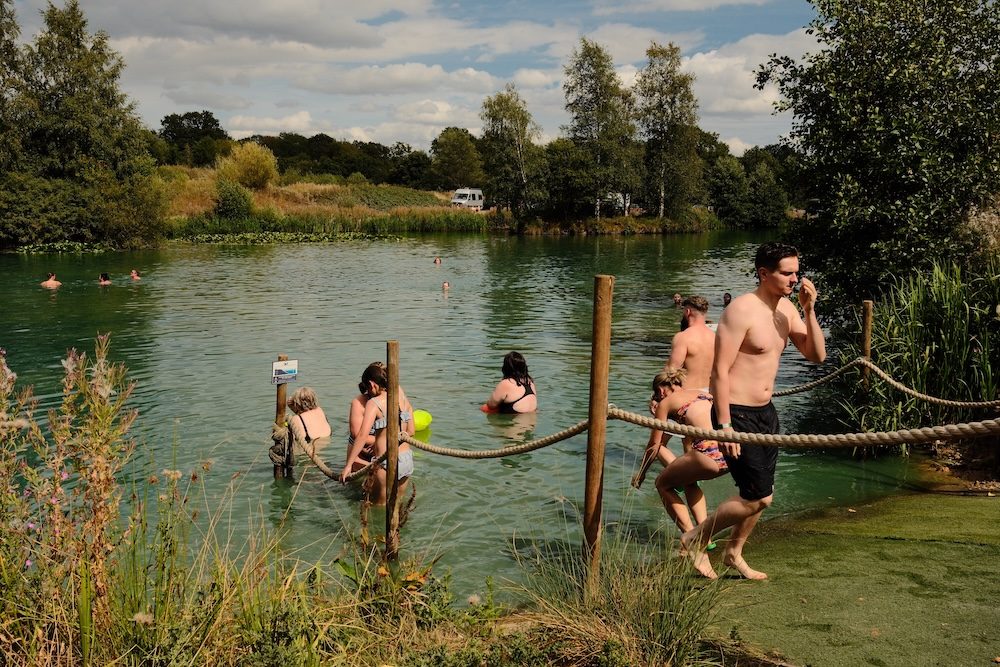
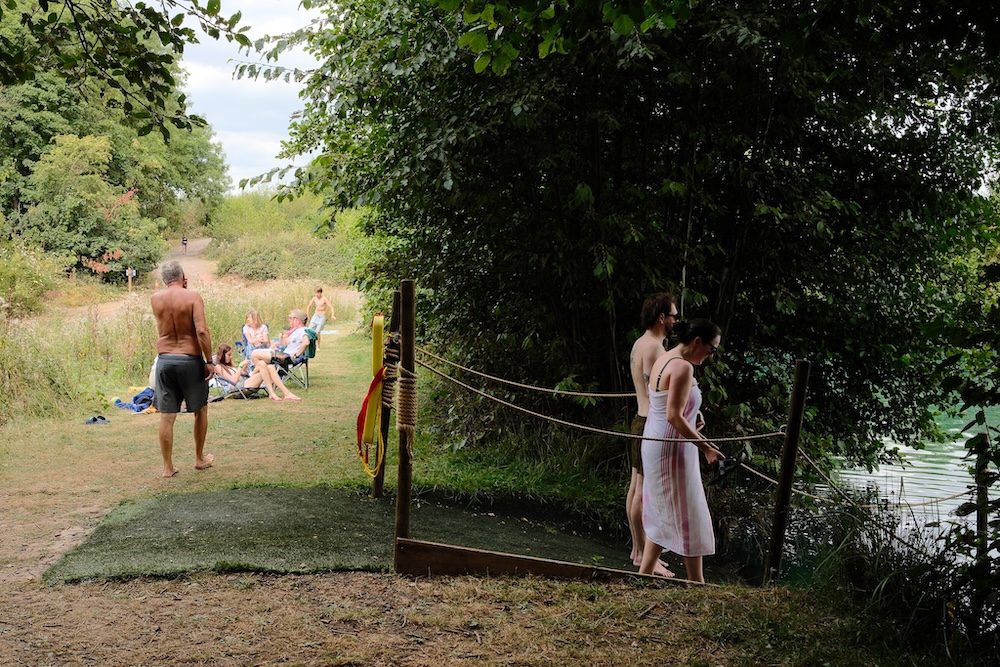
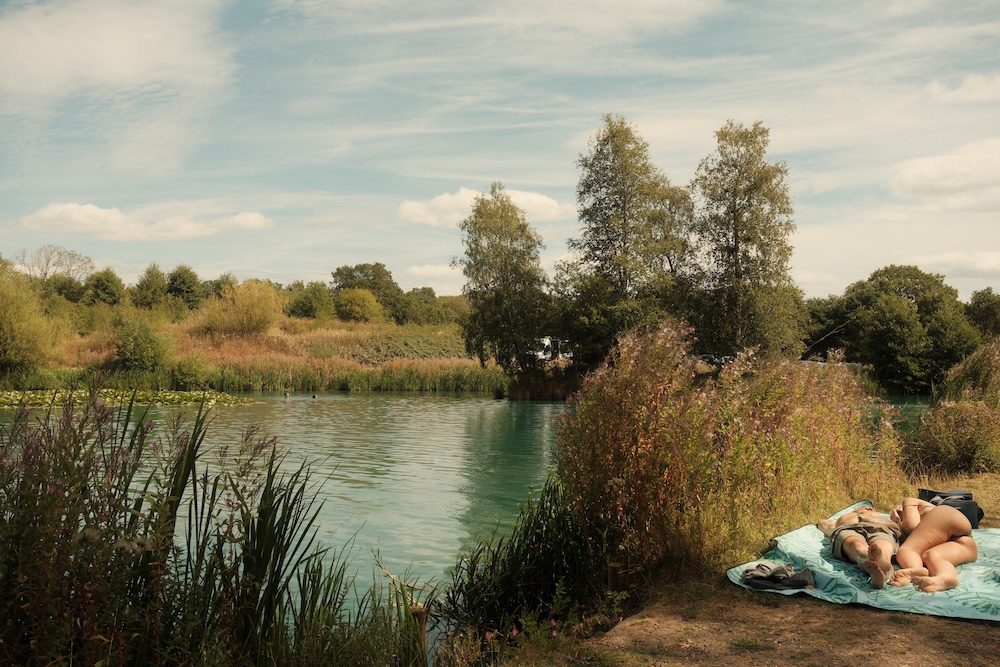
Fujifilm X-E5 JPEGs - these photographs haven't been edited
The photographs in this post were taken on a day out using a custom film recipe I'd found through a photographer on Instagram. I shot them as JPEGs and what you see here is what came out of the camera. No Lightroom, no preset, no Instagram filter. I love the colours and tones. They feel like finished photographs.
And, interestingly, I took all of these with the camera set to fully automatic (more on that shortly).
I'm doing less editing
On a recent trip to Crete I also used the X-E5, but I took those photographs into Lightroom afterwards and edited them in the way I normally would.
The problem was that sometimes I felt I was making them worse. I'd start with a JPEG that already had beautiful colour and character, begin adjusting it and eventually realise I'd created something that felt rather over-edited.
That's quite a change for me as I love editing with Lightroom. It has made me think more about when an image actually needs editing and when it already looks exactly like I want it to. Of course, I'm not about to stop using Lightroom. There will always be photographs where I want or need more control. But there's something quite refreshing about taking a photograph, looking at it and thinking 'that's done. I like it exactly as it is'.
How good is the Fujifilm X-E5 image quality?
The X-E5 has a 40-megapixel sensor and the amount of detail it captures is extraordinary. I knew the specifications before I bought it, obviously, but knowing something has a 40MP sensor and actually seeing the results are two rather different things.
I've been genuinely impressed by the quality of the images. But that isn't the thing I like most about it, it's the whole experience. The camera feels lovely to hold. The dials give it a retro feel. The shutter button has a really satisfying click. Choosing a film simulation or recipe before I start photographing feels like part of the creative process. It's a camera I want to pick up.
It hasn't all been plain sailing
I don't want to make this a blog post that makes you think I've bought a new camera and suddenly every photograph I take is amazing. They aren't - I've made some ridiculous mistakes. I've managed to take photographs at insanely high ISO settings without realising it. I've also missed focus a lot and ended up with shots that aren't sharp. I'm still working out why that's been happening more than usual.
And the controls have taken some getting used to. If you're used to a camera with a conventional mode dial labelled P, A, S and M, the Fujifilm way of doing things can initially feel quite different and I'm definitely still learning.
I've even been putting it into Auto mode...
This is something I particularly wanted to include because I think we sometimes get far too hung up on the idea that being a "proper photographer" means controlling everything ourselves. I've used my X-E5 in Manual and in Aperture Priority, with the camera choosing the shutter speed and ISO. And, as I mentioned earlier, the photographs you see in this post were taken in fully automatic mode.
I don't see that as a weakness at all. In fact, I'm beginning to think it's part of what I'm enjoying about this camera. Sometimes I want to control the aperture. Sometimes shutter speed matters. Sometimes I want to make very deliberate technical decisions. But sometimes I just want to look.
To notice the light, the colours, the person walking into the frame or the relationship between two things. And if the camera can take care of the technical decisions while I concentrate on seeing and capturing the photograph, that's absolutely fine by me.
Knowing how your camera works gives you the choice. It doesn't mean you have to prove it every time you press the shutter.


It's changing what I photograph
I've noticed that I'm choosing the X-E5 over my phone more often, although I'm not carrying it everywhere with me. If I'm going somewhere I think might be interesting photographically, I'm increasingly likely to take it. I'm also doing more candid, street and documentary-style photography.
I think the 23mm lens has something to do with that. I thought I'd need a zoom, which is why I bought the 18-55mm f2.8 lens as well. But so far I've enjoyed the restriction of the 23mm far more than I expected. I can't stand in one spot and zoom in and out. I have to move, look and think about where I position myself.
And because the camera and lens are relatively small, it doesn't feel cumbersome to carry around. I can see myself using it a lot to create photographs for my blogs and teaching too.
Should you buy a Fujifilm X-E5?
This is the bit where I really don't want to say, "Yes! Everyone needs one!" If I knew you and knew where you were with your photography, I might tell you to buy one. For some people I think it could be exactly the right camera. For someone else, I'd probably tell them to save their money.
I'd want to know what camera you already have, what you like and dislike about it, what you photograph and, most importantly, what you think a new camera is going to change.
It's very easy to look at somebody else's photographs and think their camera is the missing ingredient. Usually it isn't. Buying the same camera and lens as another photographer isn't going to make you see what they see. It isn't going to improve your composition or make you suddenly notice beautiful light.
And if you're still struggling to understand the camera you already own, buying one with a completely different system of dials and controls may actually make things more confusing rather than less.
The best camera is the one that makes you want to use it
The Fujifilm hasn't magically made me a better photographer, but it has made me excited about going out and taking photographs. I'm enjoying experimenting with different looks. I'm taking more candid photographs. I'm enjoying the simplicity of using one small prime lens. I'm thinking about what I see rather than automatically thinking about how I'll edit it later.
Most of all, it's reminded me that photography is supposed to be enjoyable. And you absolutely don't need a Fujifilm X-E5 to experience that. Sometimes what you need isn't another camera at all. You just need a reason to pick up the one you've already got.
Fancy giving your camera a bit more use?
If you've got a camera sitting at home that you really want to use more often, my 30 Days of Photography Challenge starts on 1st September. You'll get one simple photography prompt every day, designed to give you a reason to pick up your camera, practise what you already know and start noticing more of what's around you.
It isn't about taking technically perfect photographs or finding something spectacular to photograph every day. It's about practising photography - little and often - and hopefully rediscovering some of the fun of it along the way.
If you'd like to be kept in the loop on this and other photography events and challenges sign up to the Love Your Lens newsletter.
No comments yet.