Many people come to my photography workshops wanting to improve their photography composition but are convinced that they don't have a creative eye. They'll say things like, "I don't know how photographers spot a good picture," or "I'm just not very creative."
The truth is, I don't think that's the problem at all. I believe most people already have a much better eye for composition than they realise. The challenge is learning to trust it, understand it, and develop it.
The Photograph I Didn't Fully See
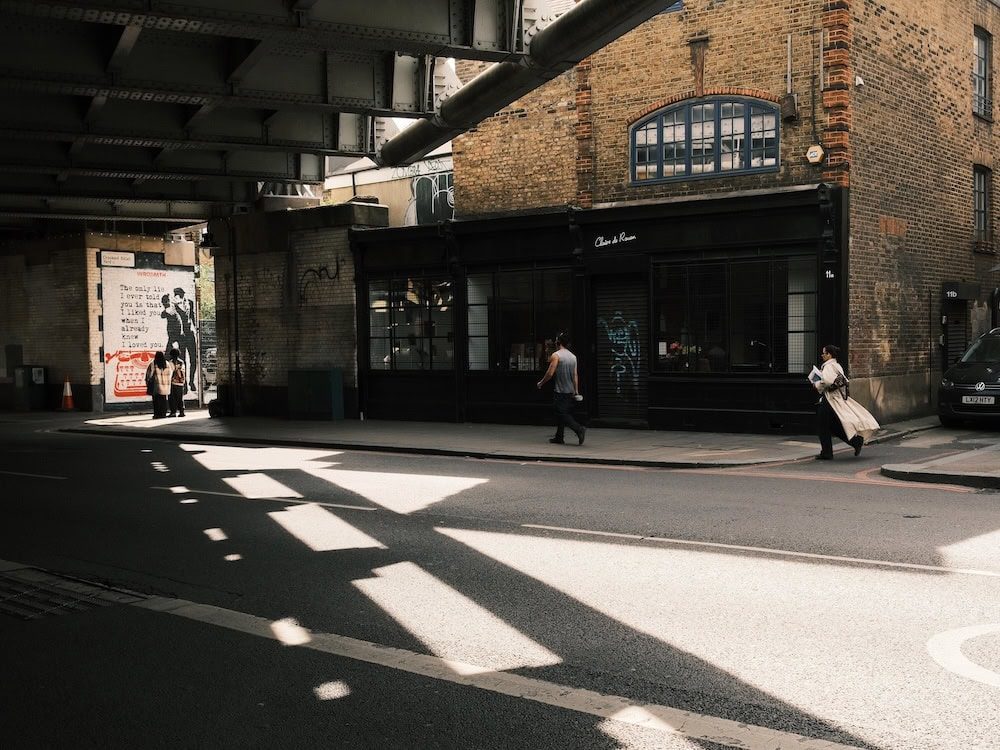
I took this photograph during a recent trip to London. I was walking through the city with my Fujifilm X-E5 when something caught my attention. The sunlight was streaming across the street, creating diagonal lines of light and shadow The lines led to a couple of people standing in the light and I instinctively raised the camera and pressed the shutter.
The whole thing happened in a second. But when I reviewed the image later, I discovered something I hadn't consciously noticed at the time. In front of the people was a poster containing the words:
"The only lie I ever told you was that I liked you, when I already knew I loved you."
(Poster and words by @wrdsmth).
Suddenly the image took on a different meaning. The poster became the main part of the story. It was one of those moments that photographers love. A photograph that reveals more than you realised when you pressed the shutter.
Photographers Don't Analyse Every Shot
People often imagine that photographers carefully assess every scene before taking a picture. In reality, that's rarely what happens.
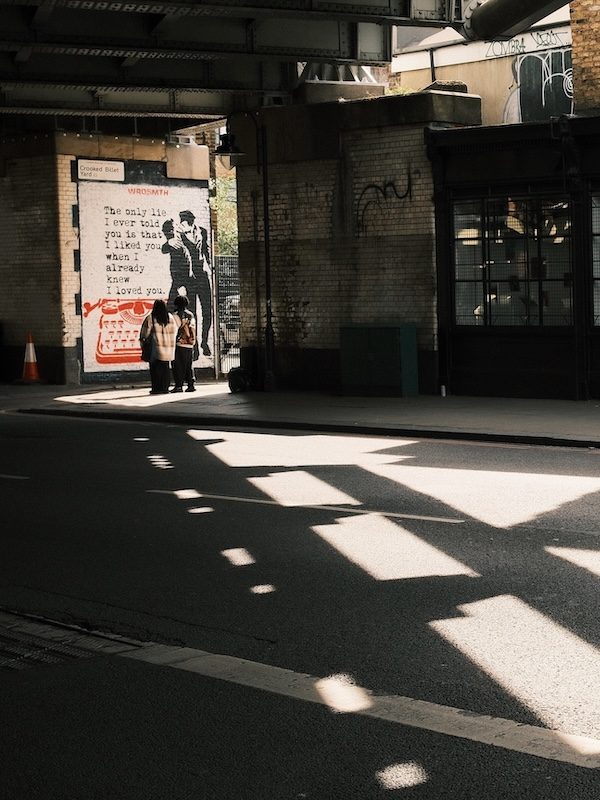
When I made this photograph, I wasn't consciously thinking about leading lines, visual balance, framing or storytelling. I simply recognised that the light, the shapes and the people within the scene were creating something interesting.
I knew there was a photograph there. The detailed analysis came later.
This is something I think many beginners find reassuring. Experienced photographers don't have a magical ability to see things that nobody else can. What they have developed is visual awareness through practice.
You've Been Learning Composition Your Entire Life
One of the key ideas I explore in my photography workshops is that you've already spent years learning composition without realising it.
Think about how many visual influences you've absorbed throughout your life. You've watched films and television. You've looked at photographs, magazine covers and advertising campaigns. You've walked into beautifully designed homes, restaurants and shops. You've noticed fashion, architecture and product design.
All of these experiences have helped shape your understanding of what looks pleasing, balanced, dramatic or interesting.
If I show a group of people two photographs and ask which one they prefer, they rarely struggle to choose. They may not know the technical terms, but they'll often say things like:
"That one feels balanced."
"My eye goes straight to the subject."
"That image feels cluttered."
"I like the light in that one."
These aren't random reactions. They are observations based on years of visual experience. The creative eye is already there.
The Difference Between Luck and Intention
So if people already have a creative eye, why do some photographs work better than others? The answer is that understanding composition helps bridge the gap between instinct and intention.
Many photographers occasionally create a great image by chance. They happen to stand in the right place at the right moment and everything comes together. Learning composition helps you understand why it worked.
Once you begin recognising patterns, shapes, light, balance and visual flow, you can start creating stronger photographs more consistently. You move from hoping a photograph works to actively shaping it.
Why Composition Isn't About Rules
This is where composition sometimes gets a bad reputation. People hear terms such as Rule of Thirds, leading lines or negative space and worry they're about to be handed a list of complicated rules.
That isn't how I approach composition. I see these techniques as tools rather than rules. They're simply ways of directing attention, creating balance, simplifying a scene or strengthening a story. The goal isn't to make every photograph look the same. It's to understand why certain choices create particular effects.
Developing Your Creative Eye
One of the most exciting things about photography is that visual awareness can be developed. The more photographs you take, the more you begin to notice. You start spotting light before you reach for the camera. You see distractions at the edge of the frame. You recognise patterns, shapes and relationships between subjects.
Eventually many of these decisions become instinctive. You raise the camera because something feels right. That's not luck. That's experience quietly doing its job.
And every now and then, as happened with my London photograph, an image gives you something unexpected. A detail you didn't consciously notice at the time suddenly becomes the thing that makes the photograph special.
Learn Composition Without the Jargon
My new Composition for Better Photos workshop is designed for photographers who want to move beyond simply pointing the camera and hoping for the best.
We'll explore why some photographs grab our attention, how the eye moves around an image, and how composition can help you create stronger photographs with more confidence. Most importantly, we'll focus on developing your visual awareness so that over time many of these decisions become instinctive.
Because great composition isn't about following rules. It's about learning to trust your eye and understanding what it's already telling you.
No comments yet.